

Are Purple Potatoes Good for Home Gardens? A Grower's Review
Last Updated: October 30, 2026
Quick Summary
Purple potatoes are good for home gardens, and easier to grow than their grocery-store price suggests. They need sun, loose soil, steady water, and about three months of frost-free weather, and they can yield like mainstream varieties when given room. The real limiting factor is seed, so start with certified seed potatoes rather than supermarket tubers.
Purple varieties often run longer to maturity than early whites, so they suit gardeners with a full season ahead.
The full cycle runs roughly 80 to 110 days depending on variety.
Plant seed pieces two to four inches deep and about twelve inches apart, after the last frost.
A five-gallon bucket or grow bag holds one plant comfortably and yields 1 to 2 lb.
Cure tubers in a dark, humid spot for about a week before cool storage, and never wash them first.
Table of Contents
Are Purple Potatoes Good for Home Gardens? The Short Answer
Yes. Purple potatoes are good for home gardens, and easier to grow than their grocery-store price suggests. A purple potato is still a potato.
Here is what most guides get wrong: the limiting factor is rarely the plant, it is the seed.
Purple and blue potatoes earn their place in a home garden for three reasons:
They can yield like mainstream varieties when given room.
Their color can hold through cooking, depending on method.
The tradeoff is timing and patience. Purple varieties often run longer to maturity than early whites, so they suit gardeners with a full season ahead.
Purple Potato Varieties Worth Growing at Home
Variety choice does more for your results than any other single decision. Each purple potato variety differs in days to maturity, tuber size, and color retention. Pick for your climate first, then for your kitchen.
Here is how the main types compare:
Variety | Skin and Flesh | Days to Maturity | Best For |
Purple Viking | Purple-splashed skin, white flesh | Mid-season | Roasting, mashing, all-purpose use |
Purple Peruvian | Deep purple skin and flesh | Late season | Color retention, potato salad |
Russian Blue | Blue skin, dry white flesh | Mid to late | Baking, fries, storage |
All Blue | Blue skin and flesh | Mid to late | Novelty color, roasting |
Purple Viking is the friendliest starting point: dramatic in the ground and on the plate, and it cooks like a standard potato, which makes it forgiving for first-time growers. Purple Viking seed potatoes are available to order. Purple Peruvian is the one to choose when you want the color to survive a boil, its flesh stays deep violet, which is why it shines in potato salad and gnocchi. Purple Peruvian seed potatoes can be ordered for your garden.
Grow two: one all-purpose, one color-forward.
How to Grow Purple Potatoes from Seed to Harvest
Growing purple potatoes follows the same rhythm as any potato: start with clean seed, plant at the right depth and spacing, keep the soil moist but not soaked, and hill the stems as they rise. The full cycle runs roughly 80 to 110 days depending on variety.
California Gardening
Choosing Seed Potatoes That Are Actually Disease-Free
Disease-free seed is the foundation of the whole crop. Seed potatoes are grown to limit disease pressure. Grocery-store potatoes are a gamble: they may be treated with a sprout inhibitor and can carry disease into your soil.
Buy certified seed, and buy early generation stock when you can, it has been through fewer field cycles, so it carries a lower disease load. For the full picture on sourcing, read our guide to pathogen-free seed potatoes for home gardens.
Soil, Sun, and Planting Depth
Sun and drainage decide success more than soil richness. Potatoes want six or more hours of direct sunlight and loose, well-drained soil.
Plant seed pieces two to four inches deep and about twelve inches apart, with rows two to three feet apart, cut-side down and eyes up. Wait until soil has warmed and the last frost has passed; cold, wet soil stalls sprouting and invites rot.
Sunlight: six or more hours daily.
Soil: loose, well-drained, enriched with compost.
Depth: two to four inches.
Then let the plants tell you what they need. When stems reach six to eight inches, hill soil around them to keep tubers covered and cool.
Growing Potatoes in Containers and Buckets
Container growing works well for purple potatoes and solves the two problems small gardens face: poor soil and limited space. A five-gallon bucket or grow bag holds one plant comfortably. Fill it with loose potting mix, plant one seed piece, and add more mix as the stem grows, leaving the top leaves exposed.
The rules for containers are simple:
Drainage holes are non-negotiable. Standing water rots tubers.
Water when the top inch of soil feels dry, not on a fixed schedule.
Keep the container in full sun and rotate it for even growth.
Container potatoes dry out faster than garden beds, so check moisture more often in hot weather. The payoff is control: you can move the bucket to follow the sun, and harvest is as easy as tipping it over.
When to Harvest Purple Potatoes and How to Cure Them
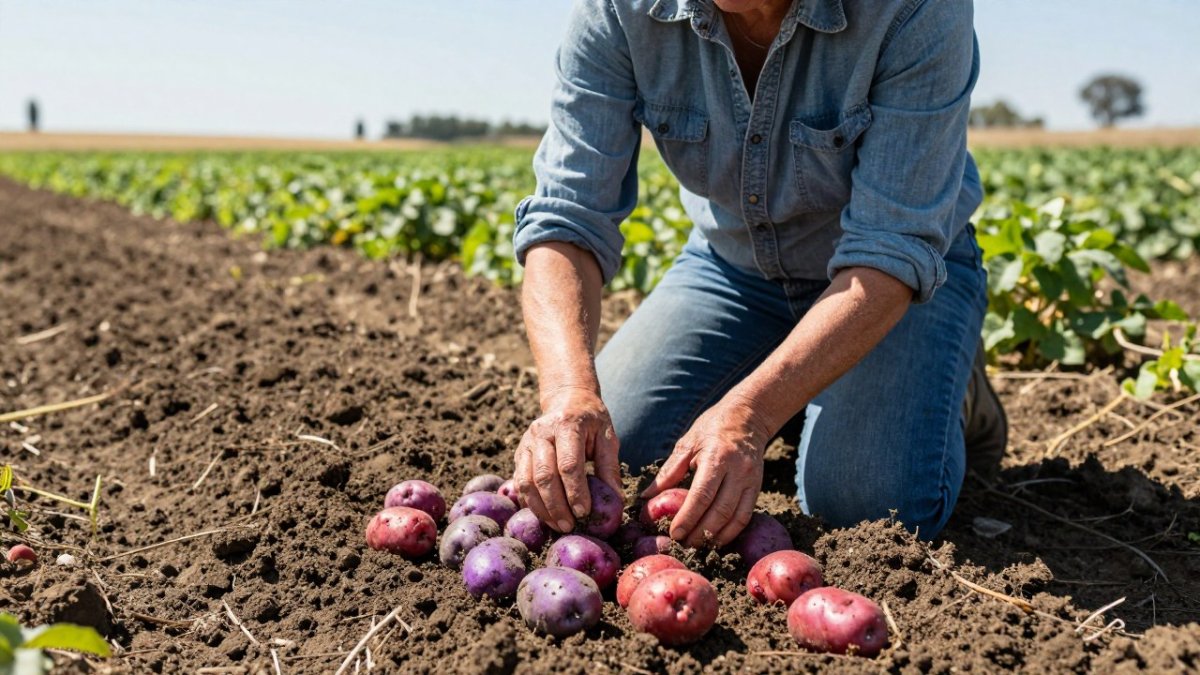
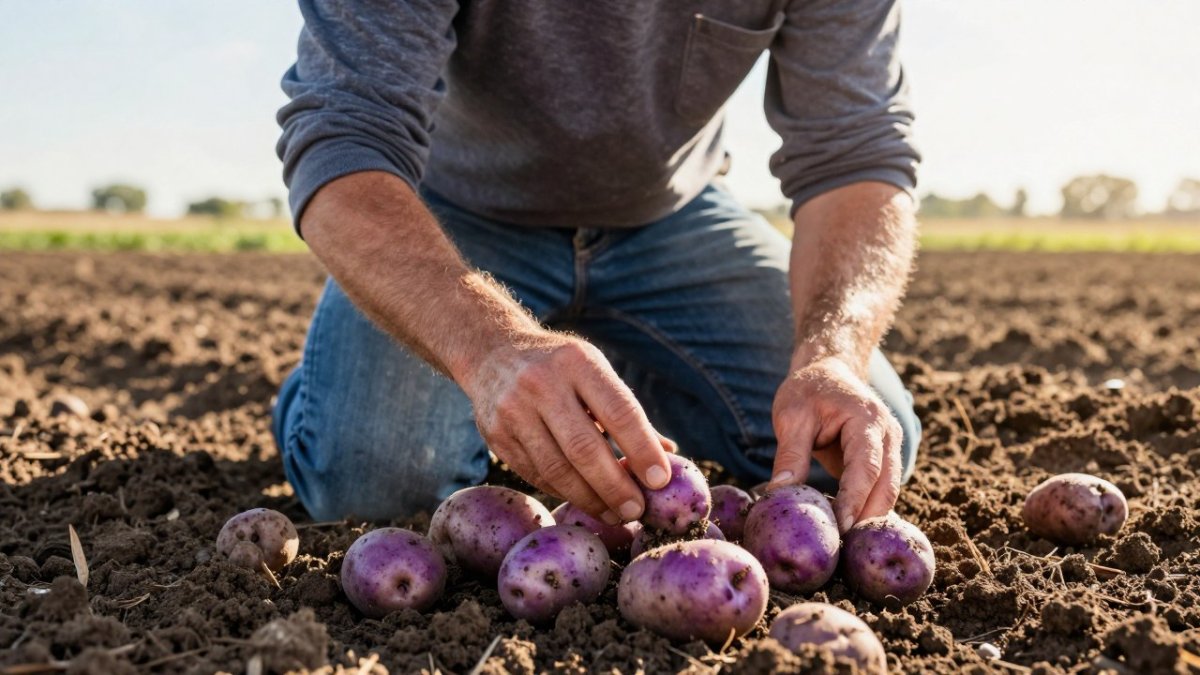
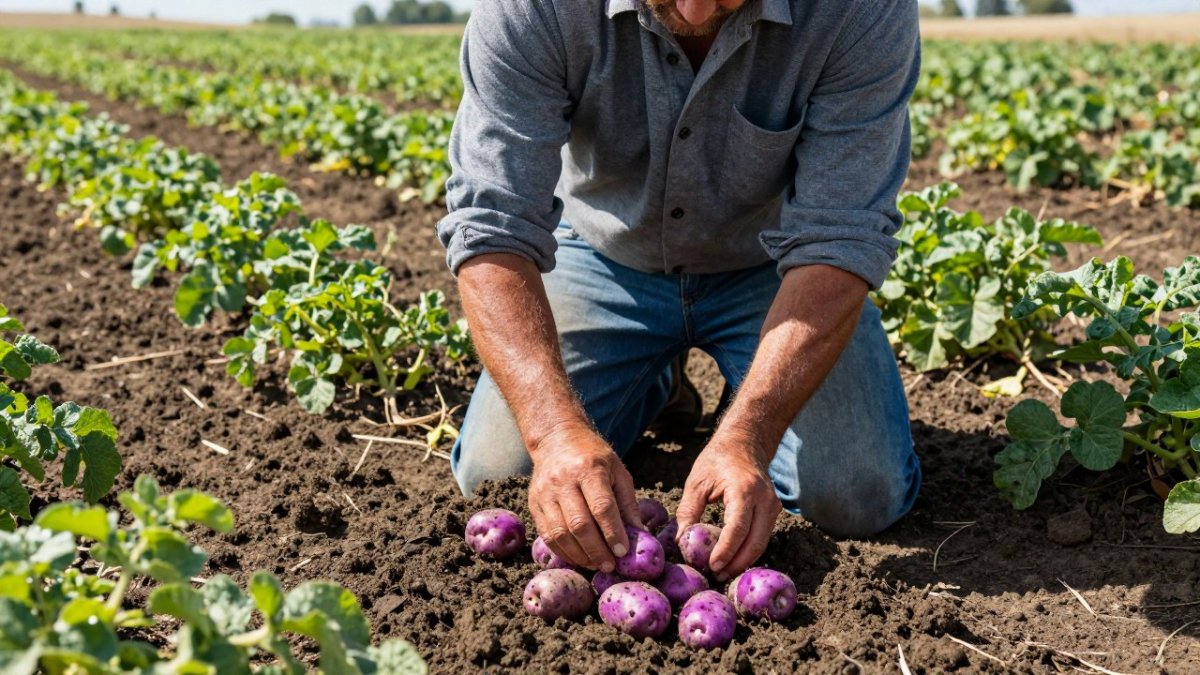
Harvest purple potatoes when the plants flower and then begin to die back, usually 80 to 110 days after planting.
Stop watering about two weeks before harvest. Let the soil dry a little, then dig with a fork well outside the plant to avoid spearing tubers. Purple skin shows every nick, so work slowly.
Curing matters and most people skip it. Brush off soil, do not wash, and lay the tubers in a dark, humid spot for about a week to let the skin set.
Cure: about one week, dark and humid.
Store: cool, dark, well-ventilated space.
Avoid: washing before storage, which invites rot.
Disease, Pest, and Storage Problems to Watch For
Prevention beats treatment with potatoes, and the biggest risks are soil and moisture problems. What most guides skip is timing: the same disease pressures show up on a predictable schedule, and matching prevention to that calendar does more than any spray.
A Season-Long Prevention Calendar
Before planting: Rotate beds so potatoes follow a non-solanaceous crop (beans, corn, brassicas) with at least a three-year gap. Test soil pH; potatoes prefer slightly acidic soil around 5.0-5.5, and alkaline soil invites scab. Buy certified seed, not grocery-store tubers.
At planting: Plant only after soil warms and the last frost passes. Cold, wet soil is the single biggest driver of seed-piece rot. Space plants so foliage dries quickly.
During the season: Water at the base, not overhead, and water in the morning so leaves dry before evening. Hill thoroughly to keep tubers covered, light exposure causes greening. Remove and destroy any plant showing sudden wilting or dark, water-soaked leaf spots rather than composting it.
The Main Problems and What Actually Helps
Late blight: Dark, water-soaked leaf spots that spread fast in cool, wet weather. There is no cure once it takes hold, remove affected plants immediately and avoid overhead watering. Some purple and blue varieties show moderate resistance, but none are immune, so rotation and airflow matter more than variety choice.
Scab: Rough, corky patches on skin, driven by soil that stays too dry or too alkaline. Keep soil evenly moist during tuber formation and avoid fresh manure or lime before planting.
Wireworms and slugs: Tubers with holes and tunnels. Dig promptly at maturity, avoid leaving tubers in the ground, and keep the bed free of decaying organic matter that shelters them.
Green skin: Tubers exposed to light turn green and produce solanine. Hill thoroughly and store in the dark. Cut away any green portions before eating; heavily greened tubers are best discarded.
Watch Out Never compost diseased potato foliage or tubers. Late blight and several tuber rots survive composting and can reinfect next year's bed.
Region and Climate Notes
Pressure varies by climate. In humid, cool summer regions, late blight dominates and airflow plus rotation are your first defenses. In hot, dry regions, scab and moisture stress are more common, and consistent irrigation during tuber set matters more than blight scouting.
In storage, the enemy is moisture and warmth. Keep potatoes cool, dark, and ventilated, and remove any that soften or sprout. Never store them in a sealed plastic bag.
What Purple Potatoes Cost You in Space and Yield
Space and yield are the honest tradeoff, and more manageable than most gardeners expect once you put numbers on them.

Growing Method | Space per Plant | Typical Yield per Plant | Notes |
In-ground bed | About 1 square foot (12 in. spacing, 24-36 in. rows) | 1.5-3 lb. of tubers | Best volume per square foot when soil is loose and hilled |
Raised bed | About 1 square foot | 1.5-3 lb. | Same as in-ground if drainage is good |
5-gallon bucket or grow bag | One plant per container | 1-2 lb. | Lower yield but movable and easy to harvest |
10-gallon container | One plant per container | 2-3 lb. | More soil volume buffers moisture swings |
A ten-plant garden row therefore lands in the 15-30 lb. range in a good season, enough for several meals plus storage.
Seed quantity follows the same math. Two to three pounds of certified seed potatoes, cut into pieces with at least two eyes each, plants roughly 10-15 hills.
The real cost is time in the ground.
Key Takeaway Plan for about one plant per square foot in beds and one plant per five-gallon container. Expect 1.5-3 lb. per plant in the ground and 1-2 lb. per bucket. Buy two to three pounds of seed for a 10-15 hill patch.
Here is how we would plan it: grow two varieties, half in a bed and half in buckets. The bed gives you volume. The buckets give you insurance against cold snaps and a backup if disease hits the main patch.
Ordering Certified Seed Potatoes for Your First Planting
Start with clean seed and the rest gets easier. Greenhouse minitubers are the cleanest generation seed potatoes available. Learn how to time your seed potato purchase for spring planting.
We are a small, family-operated farm, and our seed is grown for home gardeners.
Your garden does not need to look like a farm to grow something worth harvesting. We grow certified organic, early generation seed potatoes, including rare colored and fingerling varieties.
Frequently Asked Questions
Do purple potatoes grow well in home gardens?
Yes, purple potatoes grow as reliably as standard varieties when you start with certified seed potatoes and give them full sun and loose, well-drained soil. The main differences are practical, not botanical: purple varieties often produce smaller tubers, so plant a little closer and expect a slightly lower yield per plant. Choose a variety matched to your growing season, keep the soil evenly moist during tuber formation, and hill the rows as plants emerge. Home gardeners in most climates can harvest a usable crop within 90 to 110 days.
What purple potato varieties are easiest to grow?
Russian Blue and Purple Viking are the most forgiving choices for beginners. Russian Blue and Purple Viking are commonly grown purple varieties, and All Blue is another option with purple skin and streaked flesh. Order certified seed potatoes rather than planting store-bought potatoes, which are often treated to prevent sprouting and may carry disease.
When are purple potatoes ready to harvest?
Purple potatoes are ready when the plants flower and then begin to die back, usually 90 to 110 days after planting depending on variety. For new potatoes, dig gently about two weeks after flowering while plants are still green. For storage crops, wait until the foliage yellows and collapses, then leave tubers in the ground for another 10 to 14 days to set skin. Cure harvested potatoes in a dark, humid spot for about a week before storing them somewhere cool and dark.
Can I grow purple potatoes in containers?
Yes, and containers suit purple potatoes well because the varieties tend to be compact. Use a pot or grow bag at least 12 inches deep and 15 inches wide, with drainage holes. Fill the bottom third with potting mix, set two or three certified seed potatoes with eyes facing up, and cover with 4 inches of soil. Add more soil as stems grow until the container is nearly full. Keep the mix consistently moist but never waterlogged, and harvest when foliage dies back.
Do purple potatoes occur naturally?
Yes. Purple skin and flesh come from anthocyanins, the same pigments found in blueberries and red cabbage, and these pigments occur naturally in many traditional potato varieties from the Andes. Purple potatoes are not dyed or genetically modified. The color is a bred-in trait that has existed in cultivated potatoes for centuries. Cooking methods affect how much color survives: roasting and steaming preserve it better than boiling, which can leach pigment into the water.
Comments